Sustainable Practices in Metal Fabrication for a Greener Future
Understanding Sustainable Metal Fabrication
Importance of Sustainability in Metal Fabrication
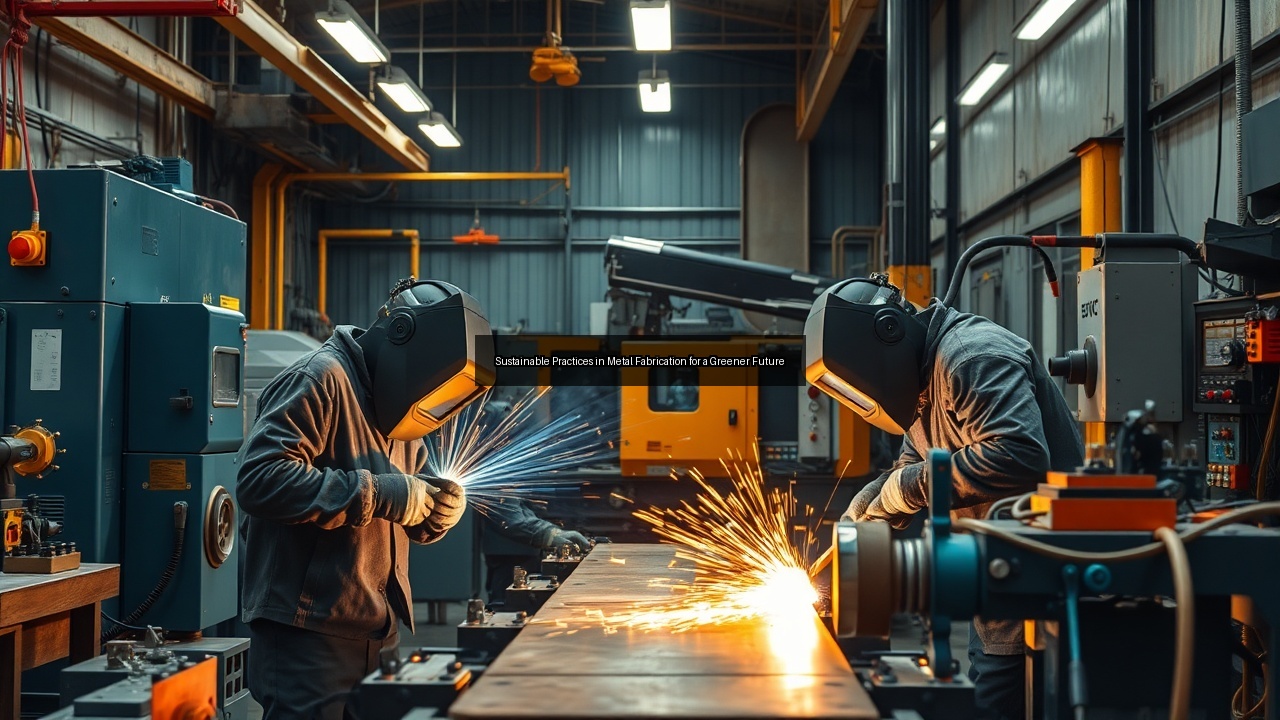
Metal fabrication drives modern infrastructure while demanding careful attention to resource use and waste reduction. Companies that prioritize sustainability cut emissions through efficient welding and fabrication processes that recycle scrap metals and minimize raw material extraction. Custom welding and fabrication services now emphasize closed-loop systems where leftover alloys return to production instead of landfills. Fabrication companies adopt these methods to lower overall costs and meet stricter regulations. Welding and fabricating teams apply expertise in brazing and machining to extend tool life and reduce energy consumption. Lead times shorten when workflows incorporate recycled metals that perform reliably in demanding applications. This approach builds long-term resilience for fabrication and welding services that serve industries from construction to transportation.
Beyond immediate cost savings, sustainable practices in metal fabrication address broader climate challenges by lowering the sector’s contribution to greenhouse gases. For instance, implementing scrap recovery programs can divert up to 90 percent of metal waste from landfills, preserving finite mineral resources while decreasing the energy required for primary mining operations. Regulatory pressures such as carbon pricing and emissions caps further incentivize adoption of low-impact methods, prompting firms to invest in energy audits and lifecycle assessments. These measures not only enhance corporate reputation but also open access to green financing and preferential contracts with environmentally conscious clients in automotive and renewable energy sectors. Ultimately, embedding sustainability into core operations creates a competitive advantage that supports both ecological stewardship and business continuity.
Overview of Welding and Fabrication Techniques
Welding and fabrication techniques form the backbone of durable metal products when executed with sustainable intent. Fabricators combine traditional methods like SMAW with newer approaches such as GMAW and GTAW to control heat input and cut power draw. MIG welding and TIG welding deliver precise joins that reduce rework and material waste. Saw operations and machining steps integrate into streamlined fabrication processes that limit excess cutting. Automation helps welders maintain consistent quality while lowering operator fatigue. Fabrication and welding services benefit when teams select technologies that match each project’s requirements. Proper inspection at every stage catches defects early and prevents costly scrapping of finished components.
Advanced parameter optimization further enhances sustainability across these techniques. By adjusting voltage, amperage, and travel speed, operators minimize excessive heat input that leads to distortion and subsequent corrective grinding. Integration of pulsed welding modes reduces filler metal consumption by 15 to 25 percent compared with conventional constant-current processes, directly lowering material costs and embodied energy. Process mapping also reveals opportunities to combine operations—for example, performing forming and welding in a single cell—to shorten material handling distances and reduce forklift usage. Such refinements collectively decrease the carbon intensity of each fabricated assembly while maintaining structural integrity demanded by end users.
Key Metals Used in Sustainable Practices
Aluminum leads many sustainable projects because its light weight lowers transportation energy and improves fuel efficiency in finished goods. Alloys of steel and other metals offer high recyclability rates that keep valuable resources in circulation. Fabrication companies choose these materials to support circular manufacturing models. Machining aluminum requires less aggressive tooling than harder metals, which extends machine life and reduces replacement frequency. Welding teams apply specialized techniques to maintain strength without excessive filler material. Design engineers evaluate each metal’s lifecycle impact before specifying it for aerospace or infrastructure projects. This selection process supports both performance goals and environmental targets.
High-strength low-alloy steels and advanced aluminum grades such as 6061 and 7075 further illustrate the synergy between performance and recyclability. These alloys retain mechanical properties through multiple recycling loops, enabling closed-loop supply chains that cut virgin material demand by more than half in some facilities. Corrosion-resistant coatings applied during fabrication extend service life, deferring replacement cycles and conserving resources. Engineers also consider end-of-life disassembly when selecting metals, favoring compositions that separate cleanly during shredding and smelting operations. This holistic evaluation ensures that material choices align with both immediate fabrication constraints and long-term circular economy objectives.
Innovative Technologies in Welding and Fabrication
Automation in Metal Fabrication
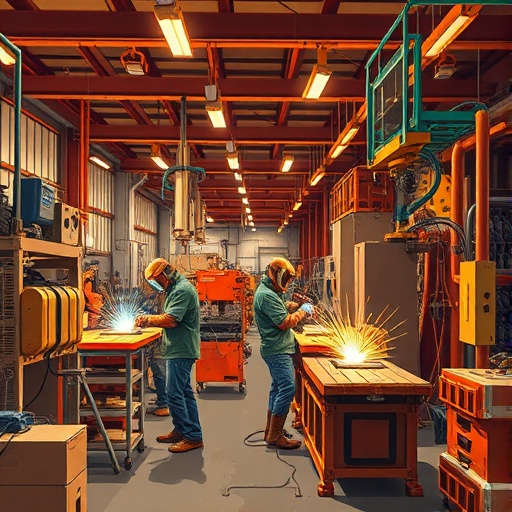
Automation transforms metal fabrication by executing repetitive tasks with precision that manual methods rarely match. Automated welding cells handle high-volume production while consuming less energy per weld. Robotic arms manage MIG welding and TIG welding sequences that maintain uniform penetration and reduce spatter. Fabrication companies integrate these systems into existing workflows to cut labor hours and scrap rates. Machines equipped with sensors monitor temperature and speed in real time, allowing immediate adjustments that prevent defects. Automation also supports consistent quality control across shifts. Companies that adopt these technologies report measurable drops in overall carbon output from their fabrication processes.
Collaborative robots, or cobots, now complement traditional industrial robots by handling smaller-batch or variable-geometry parts without extensive fixturing. Their lower payload requirements translate into reduced energy draw while enabling rapid redeployment across product lines. Vision systems integrated into automated cells detect misalignment before welding begins, eliminating the need for post-process corrections that consume additional power and consumables. Data collected from these systems feeds into predictive maintenance algorithms that schedule interventions only when necessary, further lowering unplanned downtime and associated energy waste. Over time, such intelligent automation creates a virtuous cycle of efficiency gains and emission reductions.
Advanced Welding Techniques: MIG vs. TIG
MIG welding provides speed and deep penetration suited for thicker sections in structural applications. TIG welding excels when aesthetics and precision matter, such as in thin aluminum assemblies. Both methods support sustainability when operators optimize parameters to limit heat-affected zones and distortion. GMAW and GTAW variants further refine control over shielding gas use and filler consumption. Welders trained in these techniques reduce distortion-related rework that wastes energy and materials. Fabrication and welding services combine MIG and TIG stations strategically to match each job’s needs. Proper machine calibration ensures every weld contributes to durable, resource-efficient products.
Hybrid approaches that combine MIG and TIG benefits—such as using MIG for root passes followed by TIG capping—optimize both productivity and finish quality. Shielding gas mixtures containing argon and helium blends improve arc stability while lowering overall gas volume required per meter of weld. Training programs emphasizing parameter documentation help operators replicate successful low-energy settings across shifts, reducing variability that leads to scrap. These refinements collectively shrink the environmental footprint of joining operations without compromising joint integrity or appearance standards.
The Role of Machinery in Energy Efficiency
Modern machinery incorporates variable-frequency drives and regenerative braking that recapture energy during deceleration. These features lower electricity demand during sawing, machining, and welding operations. Fabrication companies track power usage through integrated software that highlights inefficiencies in the workflow. Energy-efficient machines extend uptime while reducing cooling requirements in the shop. Regular maintenance keeps motors and pumps operating at peak performance. Metal fabrication facilities that upgrade older equipment see rapid returns through lower utility bills. This focus on machinery efficiency supports broader sustainability targets without sacrificing output quality.
Best Practices for Sustainable Manufacturing
Material Selection: Alloys and Recyclable Metals
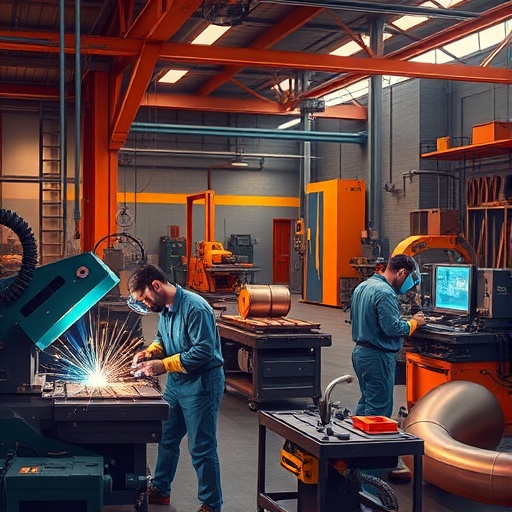
Material selection begins with alloys that balance strength, corrosion resistance, and recyclability. Fabrication teams evaluate supply chains to confirm metals come from responsible sources. Recyclable grades of aluminum and steel reduce reliance on virgin ore extraction. Design engineers collaborate with welders to specify thicknesses that minimize weight while meeting load requirements. Proper storage and handling prevent contamination that could compromise later recycling. Fabrication companies maintain detailed records of material origins to support traceability claims. These choices directly influence the environmental footprint of every completed project.
Energy-Efficient Workflow in Fabrication Processes
Energy-efficient workflows organize tasks to minimize idle time on machines and reduce peak power draws. Sequencing cutting, forming, and welding operations allows shared use of compressed air and coolant systems. Welders preheat only when necessary and employ pulsed processes that lower average energy use. Fabrication process mapping reveals bottlenecks where heat recovery or improved insulation can help. Inspection stations placed near work cells shorten travel distances for parts. Companies that refine these workflows consistently achieve lower operating costs alongside reduced emissions. Continuous monitoring ensures gains persist after initial implementation.
Quality Control and ISO 9001 Standards
ISO 9001 standards provide a framework for consistent quality control throughout metal fabrication. Documented procedures cover everything from incoming material inspection to final weld verification. Fabrication companies that maintain certification demonstrate reliable processes that reduce waste from nonconforming parts. Regular audits identify opportunities to tighten tolerances and improve first-pass yields. Welders follow standardized parameters that support both performance and sustainability metrics. Traceable records help teams analyze defects and implement corrective actions quickly. This disciplined approach builds customer confidence in fabrication and welding services.
The Future of Metal Fabrication in Aerospace
Lightweight Materials: Aluminum and Beyond
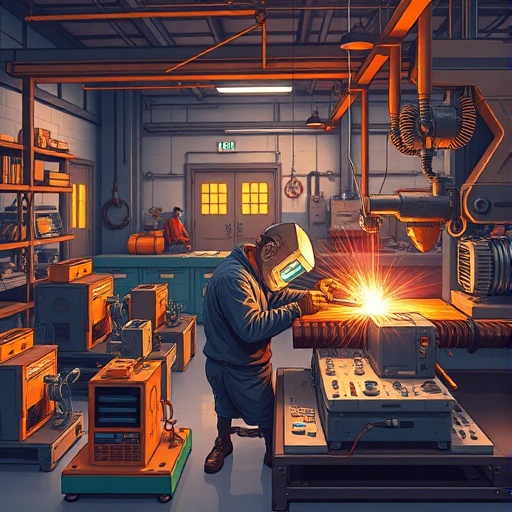
Lightweight materials such as advanced aluminum alloys dominate aerospace applications where every kilogram saved improves fuel economy. Fabrication teams machine and weld these metals with tight tolerances to preserve structural integrity. Emerging composites and hybrid alloys further reduce weight while maintaining strength. Engineers evaluate thermal properties to ensure welds withstand extreme flight conditions. Sustainable sourcing of these materials supports both performance and environmental goals. Fabrication companies invest in specialized tools that handle delicate alloys without introducing defects. Continued development of these materials will shape next-generation aircraft designs.
Cost-Effectiveness and Sustainability in Aerospace Manufacturing
Cost-effectiveness in aerospace manufacturing grows when sustainable practices reduce material waste and energy use. Precision welding and fabrication techniques minimize expensive rework on high-value components. Automation lowers labor costs while improving repeatability across production runs. Fabrication companies that track total lifecycle costs favor designs that simplify assembly and maintenance. Recyclable metals retain value at end of service, offsetting initial expenses. Integrated engineering teams balance weight reduction with manufacturing efficiency to deliver competitive pricing. These strategies strengthen both profitability and environmental performance.
Integration of Design and Engineering in Sustainable Practices
Design and engineering teams collaborate early to embed sustainability into every stage of the metal fabrication process. Simulation software predicts weld distortion and material behavior, allowing adjustments before production begins. This proactive approach cuts trial runs and conserves energy. Engineers specify joining methods like brazing or advanced MIG welding that suit lightweight structures. Fabrication companies use digital twins to optimize workflows and reduce physical prototyping. Quality control checkpoints verify that designs translate into reliable hardware. Such integration accelerates development of greener aerospace solutions while maintaining rigorous safety standards.